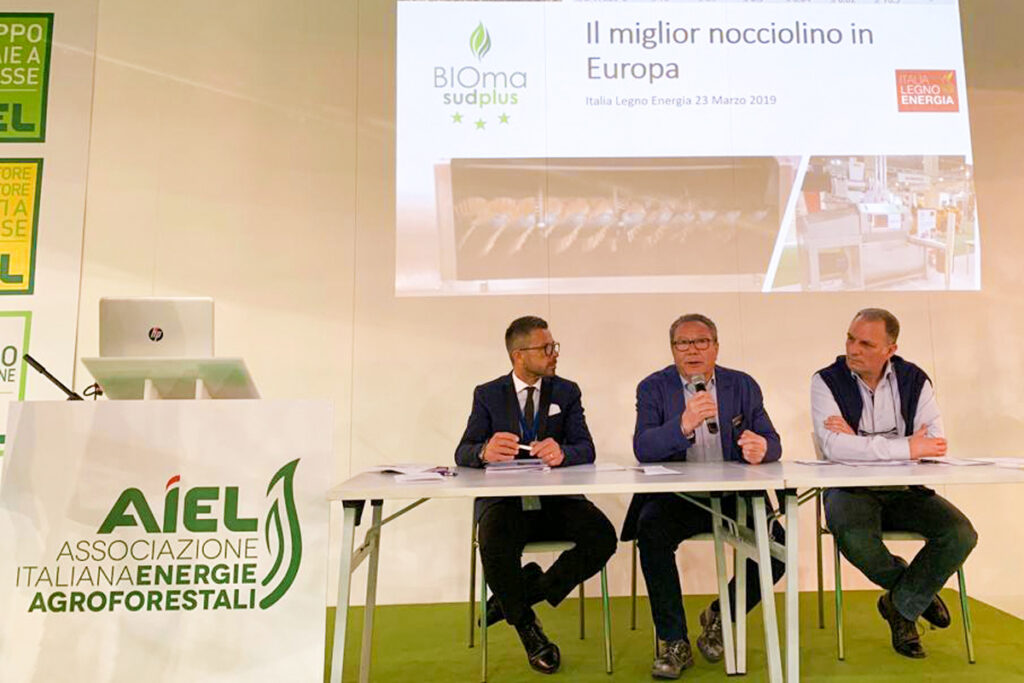
The best olive stone biofuel comes from Apulia
Thanks to the use of an innovative de-stoner, this biofuel demonstrated the greatest potential among those analysed at European level. Furthermore, its market still offers significant room for expansion.
[ Diego Rossi, Valter Francescato, Annalisa Paniz ]
Among Mediterranean solid biofuels intended for small-scale heating systems, olive stone biofuel is considered one of the most promising. When separation is carried out using BAT (Best Available Technologies), its technical characteristics can become comparable to those of high-quality wood pellets (A1/A2 according to ISO EN UNI 17225-2:2014).
The potential of this biofuel is already well recognised in the Spanish market, where the olive-growing sector is more standardised around industrial-scale production, making it possible to obtain a product with highly consistent quality standards. Indeed, since 2014, Spain has adopted a dedicated classification standard (UNE 164003:2014), specifically defining olive stone biofuel according to quality parameters.
By contrast, in Italy the olive stone biofuel market still faces significant challenges, mainly due to the lack of product standardisation caused by the widespread presence of small olive mills. However, the olive stone biofuel sector is far from marginal. In Italy, its use — across both domestic and industrial consumption — is estimated at approximately 85,000 tonnes of dry matter per year (Bados et al., 2017), with a potential reaching 272,177 tonnes of dry matter annually (Leone et al., 2015).
This is the situation in Italy
In Italy, 73% of operating olive mills process fewer than 500 tonnes of olives per year (Ismea data for the 2013–2014 season). For these smaller olive mills, the investment and operating costs associated with systems designed to separate olive stone fragments from pomace are often difficult to justify, since annual production generally remains below 60 tonnes.
The analyses carried out on olive stone biofuel during the BIOmasud Plus project provide a clear overview of the Italian situation.
On average, olive stone samples collected from Italian olive mills showed an ash content of 1.2% on a dry basis. However, the most significant figure concerns the standard deviation of ash content within Italian samples, measured at 1.3%.
The importance of this value lies in the broad variability of the data distribution. Italian olive stone biofuel displays variability levels second only to those observed in Greece and Turkey. This is largely attributed to processing carried out in small olive mills and to the technological differences among the systems used.
During the second phase of the BIOmasud Plus project, several Italian companies were inspected in order to verify the applicability of the requirements established by the certification scheme.
With regard to olive stone biofuel, Oleificio Cericola in Foggia was selected for inspection. The company uses an innovative system patented by Pietro Leone’s company: the Moliden-Leone system, a patented de-stoner capable of separating olive stone fragments upstream of the production process.
This technology makes it possible to produce olive stone biofuel with characteristics comparable to those of A1-class wood pellets (UNI EN ISO 17225-2:2014).
The olive stone biofuel falls well within the limits established for high-quality pellets with regard to the main characteristics influencing combustion emissions. The only two parameters that do not fully comply with the limits are moisture content and, consequently, calorific value. However, these deviations are marginal, since simple drying of the product would make it possible to bring both values within the required standards.
By contrast, non-compliance related to ash content or nitrogen content is far more difficult to correct through additional biofuel treatments.
Quality is essential
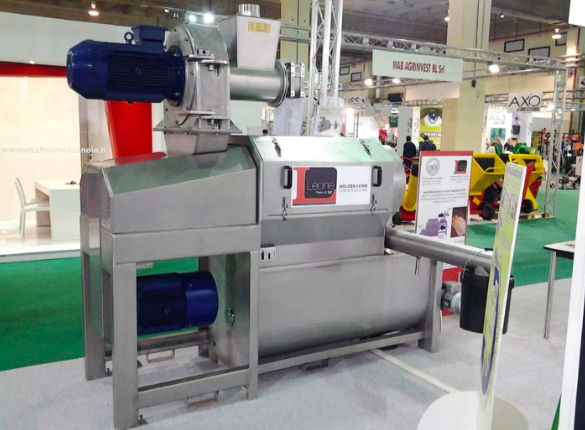
The quality of the olive stone biofuel produced using the Moliden-Leone de-stoner (hereafter D-ML) becomes particularly evident when compared with the olive stone biofuel samples analysed during the BIOmasud Plus project.
Considering the Italian average ash-content value, the gap compared with the value obtained from the de-stoned olive stone biofuel amounts to 0.9% on a dry basis.
Furthermore, the analytical results are consistent with previous studies carried out on olive stone biofuel produced by Oleificio Cericola using the D-ML system. Earlier analyses recorded even lower values, both for ash content (0.21% on a dry basis) and nitrogen content (0.044% on a dry basis).
The confirmation of the 2015 study by Leone et al. demonstrates that the olive stone biofuel obtained through the de-stoner patented by Pietro Leone e Figli Srls effectively possesses qualities superior to the average.
In addition to offering qualitative characteristics significantly above the European average, the patented system also provides substantial energy savings. A previous study reported that the hourly electricity consumption of this innovative machine is approximately 19.00 kWh. By comparison, producing olive stone biofuel through a conventional system would require the combined energy consumption of a hammer mill (9.50 kWh) and a downstream pomace olive stone separator (15.20 kWh), resulting in a total consumption of 24.70 kWh (Leone et al., 2015).
This means that, taking into account the emission factor associated with electricity generation in Italy, the reduction in emissions achieved through the use of the D-ML de-stoner compared with conventional systems amounts to 16.03 kg CO2-eq per tonne of olive stone biofuel produced.
Dry matter yield
As shown in Table 3, the use of the D-ML de-stoner increases hourly olive stone biofuel yield by 12% compared with traditional systems. However, the main bottleneck associated with de-stoners concerns oil yield. Traditional de-stoners — which remove the entire olive stone — can achieve a higher olive stone recovery rate (99.2% on a dry matter basis), with a quality comparable to, or even better than, that obtained through the D-ML system.
The critical issue with traditional de-stoners lies in oil extraction efficiency, which decreases to 73.7%, compared with 82.4% for conventional systems.
Conclusions
The potential impact of the widespread adoption of the Moliden-Leone de-stoner within Mediterranean olive-growing regions is far from negligible. Thanks to higher yields and the standardised production of a solid biofuel comparable to wood pellets, an entirely new economic sector could develop around olive-oil production.
The availability of a standardised and certified biofuel would also allow manufacturers of heating appliances and boilers to certify their systems specifically for this fuel, with the objective of achieving efficiency and emission levels compliant with the new Ecodesign Regulation.
The BIOmasud Plus project has played a fundamental role in helping companies define and recognise the quality standards of olive stone biofuel at European level.
AIEL’s objective is now to support and encourage operators and public institutions in the concrete development of a professional, domestic, and entirely Mediterranean energy supply chain.