De-stoned extra virgin olive oil: benefits and quality
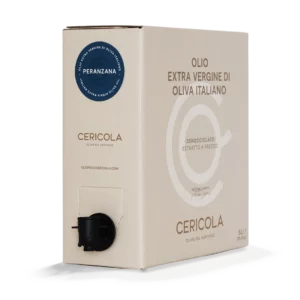
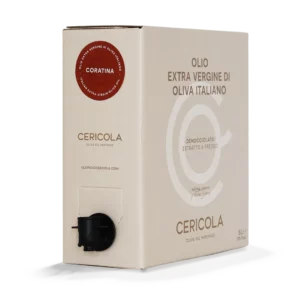
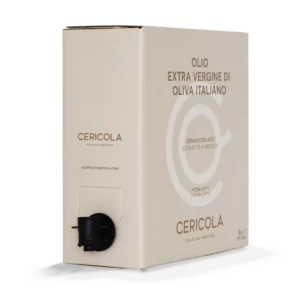
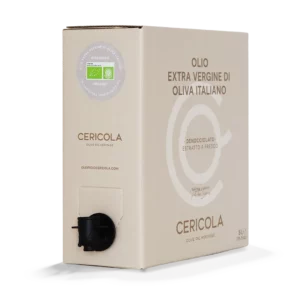
The expression itself sparks curiosity: de-stoned olive oil. It means that, before the oil is extracted, the olive stone is removed so that processing works almost exclusively with the olive pulp.
It is the flagship product of Oleificio Cericola because it combines olive-mill technology with research into flavour and product identity: more pronounced green notes on the nose, a clean sensory profile, and remarkable recognisability on the palate.
More specifically: what is de-stoned olive oil?
Oleificio Cericola’s de-stoned olive oil is obtained by milling olives after removing their stones. This type of cold-extracted extra virgin olive oil has unique organoleptic characteristics. The resulting oil has a particularly delicate flavour, thanks to the absence of tannins from the stone, while maintaining a balanced and pleasant taste of fresh olives.
This prized olive oil was already produced during Roman times, when olives were milled without their stones. Today, the production technique for de-stoned olive oil involves separating the stone and processing only the pulp, thereby eliminating the tannic substances naturally contained within the stone itself. The de-stoning process takes place after washing and before malaxation.
The benefits for our health
De-stoned olive oil is also associated with numerous health benefits. When we eat a fruit such as a peach, we consume everything except the stone. A similar principle applies to de-stoned extra virgin olive oil: the olive stone contains enzymes that, over time, can influence the properties of the final product. It is interesting to note that oil extracted exclusively from olive stones is used by the pharmaceutical and cosmetics industries because it contains valuable compounds appreciated in those sectors.
De-stoning influences the aromatic profile
The olive stone is not neutral: it contains oxidoreductase enzymes, such as peroxidase, along with compounds that, when processed together with the pulp, can influence oxidation and the transfer of aromatic components.
Removing part of the stone promotes the development of “green” enzymatic pathways (lipoxygenase), increasing the presence of C6 green notes such as (E)-2-hexenal and hexanal, responsible for aromas reminiscent of freshly cut grass, tomato leaf, and green almond. Controlled tests have shown that oils obtained from partially de-stoned olive paste contain higher concentrations of these volatile compounds and display a more pronounced green fruitiness during sensory panel evaluations.
The practical advantages (beyond flavour)
- Process fluidity – Partially de-stoned olive paste has lower viscosity, facilitating malaxation and separation without extending processing times or reducing yield..
- Extraction consistency – Partial de-stoning maintains decanter efficiency in line with traditional crushing systems, avoiding the yield losses typically associated with total de-stoning.
- Circular sustainability — The recovered olive stone fragments (~60–65%) represent a clean biomass with high calorific value, low nitrogen content, and fewer fine particles, making them suitable for energy applications with lower emissions compared to pomace.
DE-STONED OLIVE OIL AND THE MOLIDEN-LEONE SYSTEM
To create this unique type of extra virgin olive oil, Pietro and his family focused on developing a system capable of producing high-quality olive oil while simultaneously making the recovery of olive stone fragments highly efficient. The Moliden Leone system consists of an integrated sequence of three separate machines performing three consecutive unit operations::
– crushing
– de-stoning of the olive paste
– mixing and temporary holding of the paste before transfer to the malaxers.
The machine known as Moliden-Leone is capable of crushing the olives and, unlike traditional de-stoning machines, separating and recovering a variable fraction of olive stone fragments during the same processing stage.
The technology later became the subject of scientific research carried out by the Universities of Bari, Foggia, and Perugia, leading to the publication of three scientific papers in international journals.
Thanks to the use of this innovative de-stoner, it is possible to obtain a more sustainable biofuel. The olive stone fragments recovered during EVOO extraction therefore contribute both to improved olive oil quality and to greater economic and environmental sustainability, generating a significant positive impact across the entire olive-growing and olive-oil production chain.