Behind the scenes of the olive mill: how de-stoned extra virgin olive oil is produced
At Oleificio Cericola, every stage of processing is carefully designed to ensure the highest standards of quality and complete transparency. From the initial cleaning of the olives to the final bottling stage, every operation follows a process that combines traditional olive oil craftsmanship with technological innovation.
In particular, the adoption of de-stoned milling — the company’s flagship innovation — ensures an extra virgin olive oil with superior chemical and sensory characteristics. Let us take a closer look at every stage of the production process, each carefully overseen by Master Olive Miller Pietro Leone and his team in order to maintain the highest quality standards and provide consumers with complete transparency.
Olive cleaning
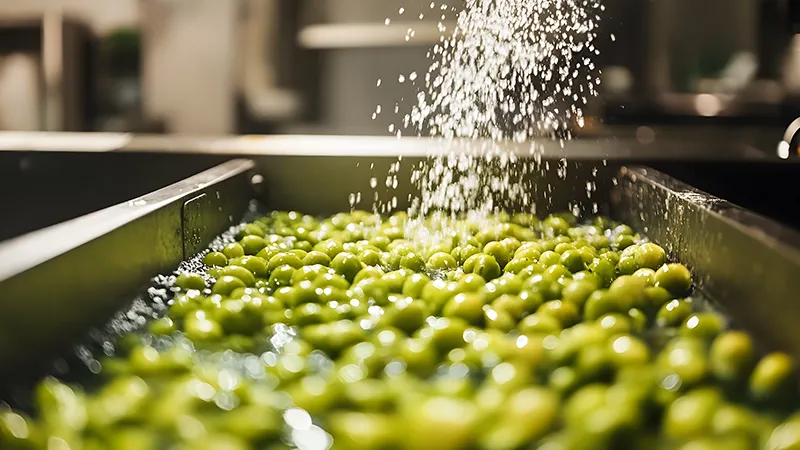
The first stage is the cleaning of the olives immediately after their arrival at the olive mill, within just a few hours of harvesting. The olives pass through a de-leafing machine (or leaf remover), which automatically removes leaves, twigs, and larger impurities by means of airflow and vibration.
The olives then pass into the washing machine, where they are rinsed with running water to remove dust, soil, and surface residues. This stage ensures that only clean, intact fruit proceeds to milling, preventing contamination of the final product. The choices made at this stage are crucial: fresh olives that have been properly de-leafed and washed provide the foundation for a high-quality extra virgin olive oil.
In addition,Oleificio Cericola processes olives harvested at the ideal stage of ripeness and ensures that no more than 24 hours elapse between harvesting and milling, thereby preserving the fruit’s aromas and polyphenols as effectively as possible.
De-stoning: the advantages of Moliden-Leone technology
De-stoning is the innovative core of the Cericola process and the stage that has established the company as an industrial pioneer in the sector. Since 1999, Frantoio Cericola has been the first olive mill to produce de-stoned extra virgin olive oil on an industrial scale, achieving from the outset a superior product in terms of both chemical and sensory characteristics.
But what exactly does de-stoned milling mean? In practice, before crushing and malaxation, the olives are deprived of their stones: the pulp is separated from the woody kernel so that only the noblest part of the fruit is processed. Although this technique was already known in Roman times, today it is carried out using modern, highly efficient machinery.
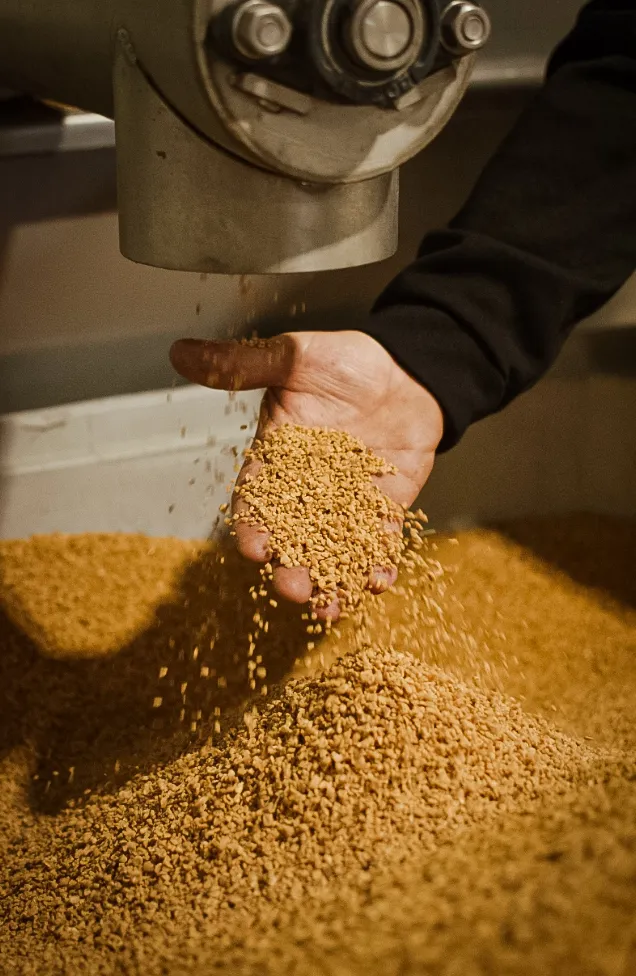
Oleificio Cericola uses the Moliden-Leone de-stoner, a patented system developed by founder Pietro Leone together with his sons Luigi and Michele. This next-generation machine performs two integrated operations in a single process: crushing the olives while simultaneously separating the fragmented stones from the paste.
In practice, the Moliden-Leone crusher-de-stoner presses the pulp while simultaneously expelling the stone fragments, which are collected separately. The result is an olive paste composed exclusively of pulp and skin, free from woody residues and ready for malaxation.
The extracted stone fragments (nocciolino) emerge already crushed and dry, making them immediately reusable as an environmentally friendly biofuel for boilers and pellet stoves. This approach also enhances the economic and environmental sustainability of the entire olive-growing supply chain by transforming a by-product into a valuable resource.
From the perspective of oil quality, de-stoning offers numerous well-documented advantages. By removing the stone, tannic compounds and certain undesirable enzymes naturally present within it — responsible for bitter flavours and oxidative processes over time — are eliminated.
The extra virgin olive oil obtained solely from the pulp is therefore smoother and more delicate on the palate, free from the woody or astringent aftertaste that can sometimes be found in traditionally processed oils. In addition, the process produces an extra virgin olive oil particularly rich in natural antioxidants (polyphenols, tocopherols, and other beneficial compounds) and more resistant to oxidation, resulting in improved shelf-life stability. The aromatic profile also benefits significantly: de-stoned oil releases fresher, greener, and more harmonious fruity notes, as the bitter and pungent characteristics associated with the stone are softened. Numerous studies confirm that oils extracted from de-stoned olive paste exhibit superior quality compared with oils produced from whole olives, both in terms of chemical parameters and sensory characteristics. In summary, thanks to Moliden-Leone technology and the meticulous care devoted to this stage of production, Oleificio Cericola produces a unique de-stoned extra virgin olive oil with outstanding nutraceutical and sensory properties, as well as superior oxidative stability.This innovation perfectly embodies the company’s philosophy of combining tradition and technology to elevate product quality.
Crushing and malaxation
After stone separation, the olive pulp undergoes crushing and malaxation — traditional stages of the process, but carried out with particular care at the Cericola olive mill.
Crushing consists of further processing the pulp (already separated from the stone) in order to break the cellular structure and release the tiny oil droplets contained within. In the case of de-stoned milling, this operation has already partially taken place inside the Moliden-Leone system; however, the paste is further refined to achieve a homogeneous consistency. The result is an olive paste: a fluid mass composed of a fine solid phase (fragments of skin and pulp) and a liquid phase (an emulsion of oil and vegetation water).
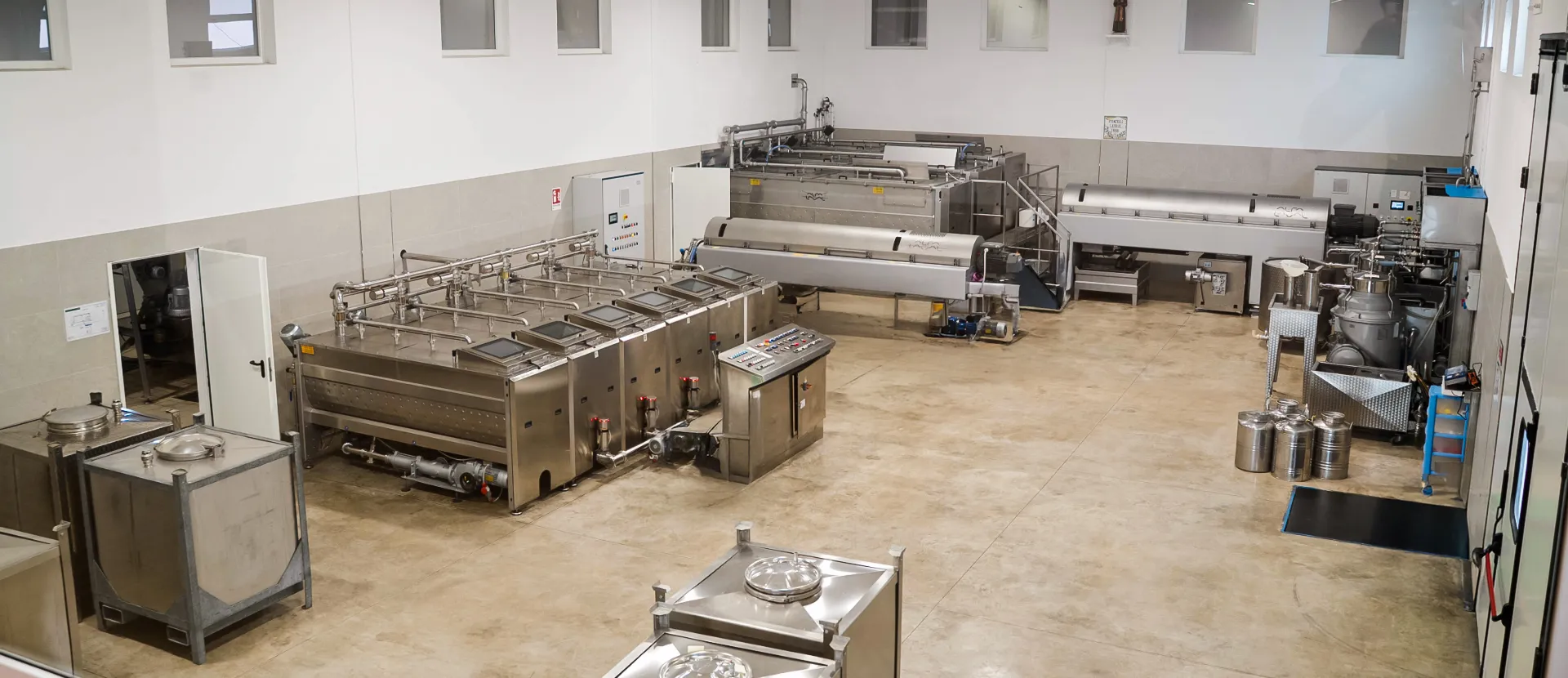
This is followed by malaxation, a slow and continuous mixing of the paste inside dedicated stainless-steel malaxers. The malaxers are equipped with temperature control systems and rotating blades that gently mix the paste for a variable period of time (typically 20–40 minutes).
The objective is to break the oil-water emulsion and allow the microscopic oil droplets to coalesce into larger droplets, preparing them for extraction.
At Oleificio Cericola this stage takes place under rigorously controlled temperatures (cold extraction, ≤27 °C) in order to preserve the oil’s volatile compounds and polyphenols.The Master Olive Miller continuously monitors the malaxation process, adjusting both temperature and duration according to the condition of the paste in order to optimise oil yield without causing oxidation or aromatic loss. In addition, advanced technological solutions are employed to minimise exposure to oxygen both during malaxation and throughout the immediately subsequent stages.
For example, modern malaxers may operate under a controlled atmosphere or within sealed systems, preventing prolonged contact between the oil and air. This preserves the oil’s sensory characteristics intact: aromas, flavours, and antioxidant compounds remain protected against oxidation and rancidity. At the end of malaxation, the well-blended olive paste is ready for the actual extraction stage.
Extraction with decanter and centrifugation
The extraction stage takes place mechanically through centrifugation, exploiting the difference in density between oil, water, and solid residues.
During the process, the malaxed olive paste is pumped into a horizontal centrifugal decanter: a high-speed rotating drum which, through centrifugal force, separates the various components. In a three-phase decanter, a small quantity of water is added, resulting in three separate outputs: the oil (an oil-water emulsion), the vegetation water, and the exhausted solid pomace. In a two-phase decanter (also known as a “water-saving” system), no additional water is introduced, resulting in only two outputs: on one side the olive oil must (oil mixed with water), and on the other the wet pomace. In both cases, the oil extracted from the decanter still contains microscopic droplets of water and residual impurities and therefore requires further clarification.
This is followed by the final centrifugation stage using a vertical centrifugal separator (also based on Alfa Laval technology), which rotates at extremely high speed to remove the final traces of water and particles from the oil. The olive oil must is fed into the separator, which produces clear and pure extra virgin olive oil on one side, while discharging the residual vegetation water on the other. Thanks to this dual centrifugation process in series (horizontal + vertical), Cericola’s de-stoned extra virgin olive oil is perfectly clean, stable, and ready for storage. The entire extraction process is carried out within a continuous closed-circuit system, reducing processing times and minimising exposure to air. From the crusher to the centrifuges, the oil flows through stainless-steel piping and machinery without manual contact, ensuring hygiene and consistent quality standards.
In addition, cold extraction fully preserves the product’s aromas and nutritional properties. At the end of this stage, the freshly produced extra virgin olive oil is immediately inspected by the Master Olive Miller, who evaluates both its quality parameters (acidity, polyphenols, etc.) and its sensory profile through professional tasting, ensuring that only oil meeting the required standards proceeds to storage.
Packaging: bottles, bag-in-box and tins
Once extracted and clarified, the extra virgin olive oil is temporarily stored pending packaging. Oleificio Cericola uses stainless-steel silos for the storage of bulk oil — inert environments in which temperature and storage conditions are carefully controlled. The tanks are saturated with inert gas (nitrogen) above the oil surface in order to prevent any contact with oxygen during storage. This precaution preserves the product’s freshness and properties intact, even during the weeks or months preceding bottling. Careful timing management is equally important: the company prefers to package the oil only when required, bottling it in batches according to demand so that the final consumer receives oil that is as fresh as possible and minimally oxidised.
Packaging is available in various formats, designed both to preserve the oil under optimal conditions and to meet different usage requirements. We offer three main packaging formats
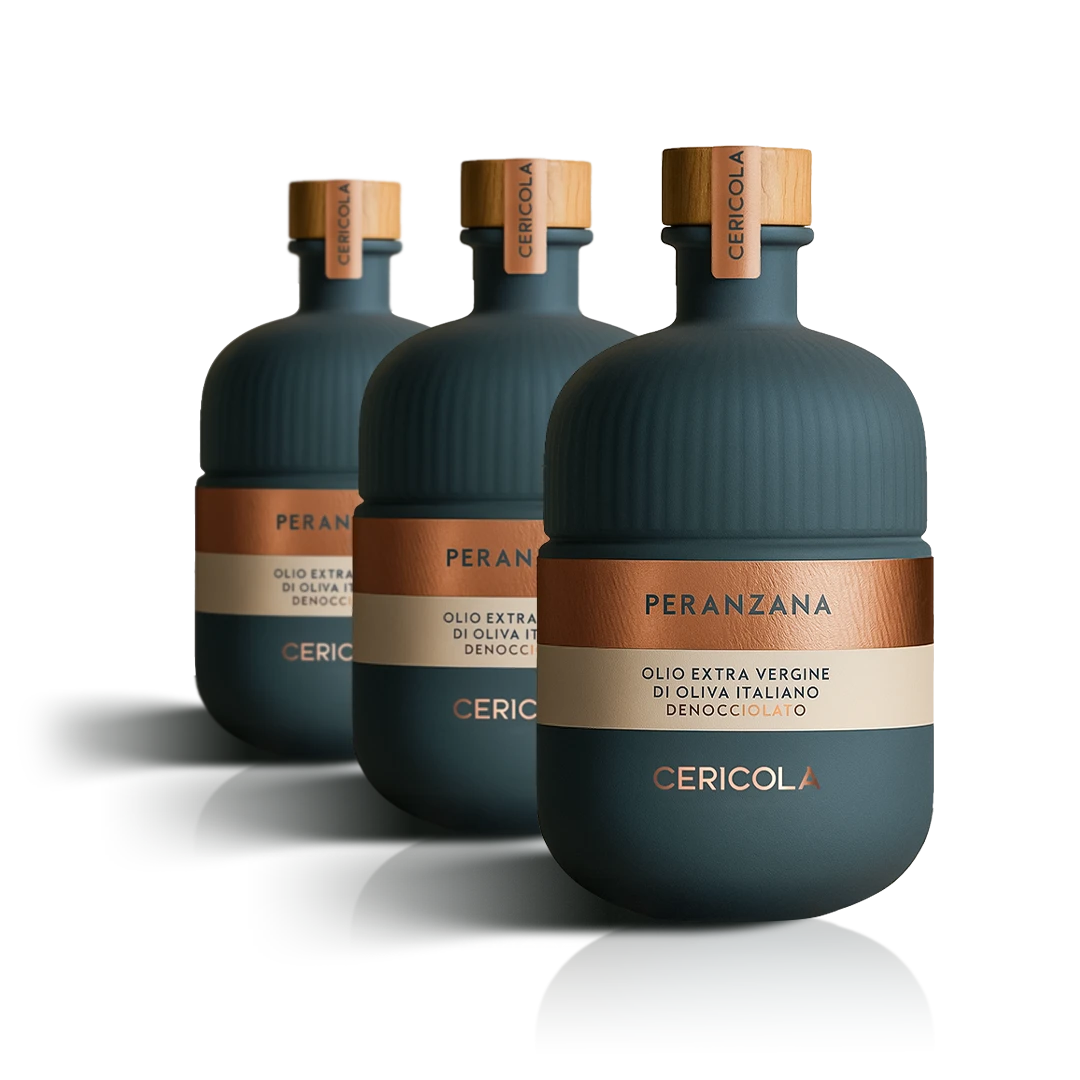
These are used for oils intended for retail sale and are made from dark food-grade glass to protect the oil from UV light.
The 500 ml bottles are filled under a controlled atmosphere and hermetically sealed, often with the addition of a small quantity of nitrogen to displace the air before capping.
This format is ideal for domestic storage and for preserving the oil’s aromas, while also ensuring an elegant presentation of the product.
Each bottle is labelled with complete traceability information, batch numbers, and certifications, in line with the company’s philosophy of transparency.
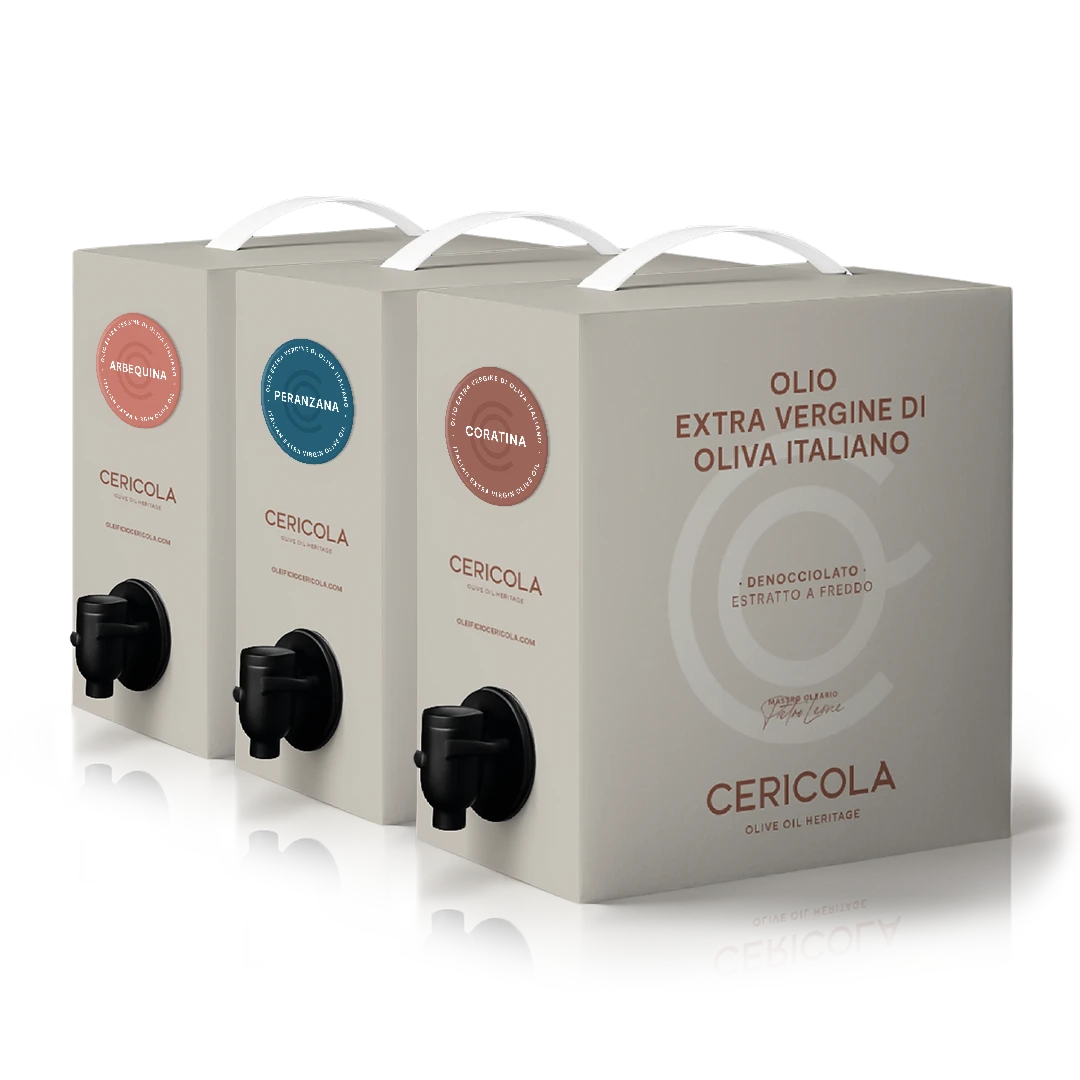
This is an increasingly popular packaging solution for extra virgin olive oil. It consists of a flexible food-grade multilayer pouch (designed to protect against light and oxygen) housed inside a cardboard box.
We offer bag-in-box formats in 1, 3, and 5 litre sizes. The key advantage of this system is that the inner pouch collapses progressively as the oil is dispensed through the tap, preventing air from entering: this mechanism keeps the oil fresher for longer — even weeks after opening — without oxidation.
In addition, the outer cardboard packaging facilitates transport while protecting the oil from light exposure. This format therefore combines practicality with excellent shelf-life performance, fully reflecting Cericola’s commitment to preserving quality over time.
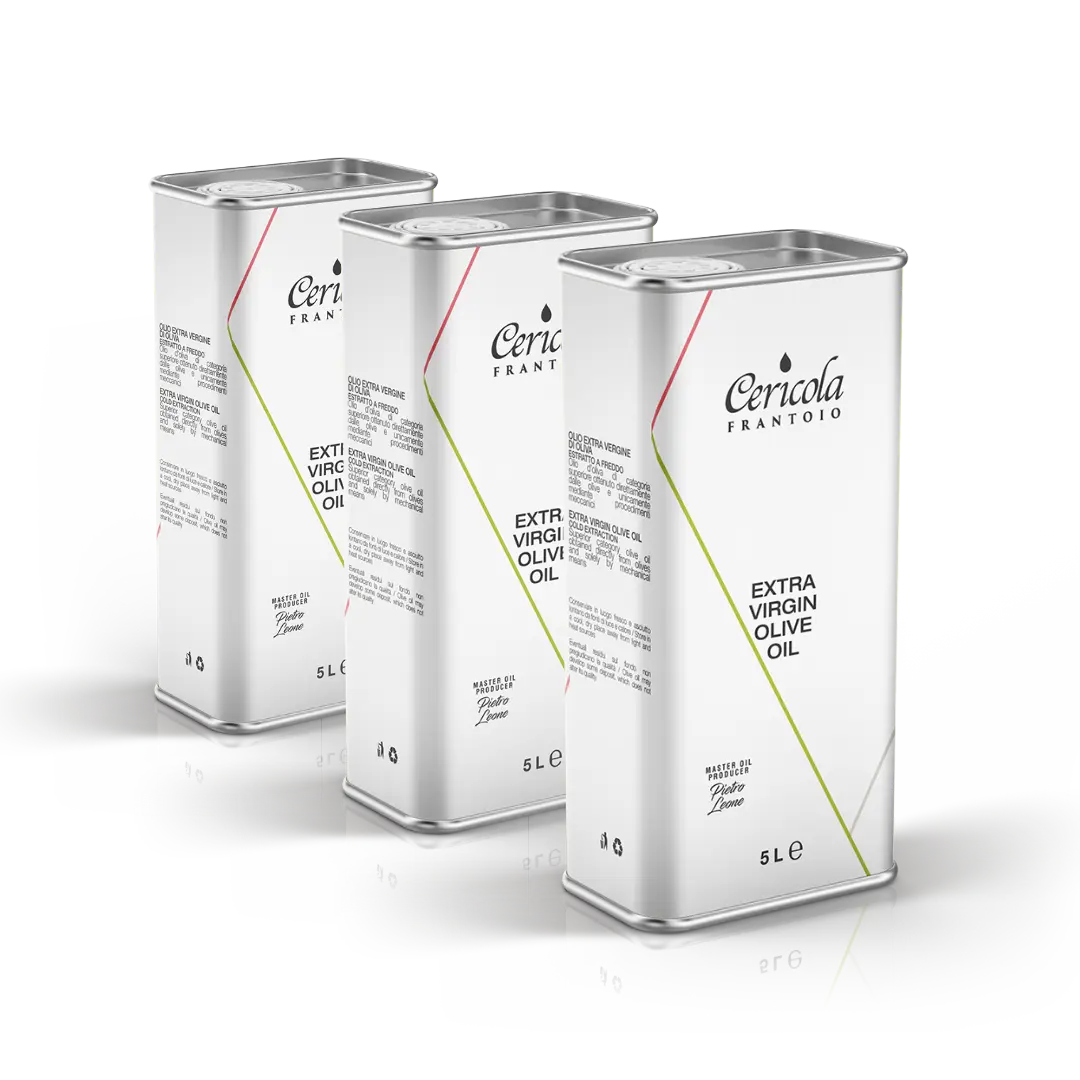
For medium and larger quantities of extra virgin olive oil, our olive mill also uses 5-litre metal tins made from tinplate or aluminium.
These tins are certified for food contact and provide a complete barrier against light exposure. They are hermetically sealed and fitted with a pouring cap.This type of packaging is traditional within the olive oil sector, highly durable, and particularly suitable for transport and shipping. Olive oil stored in tins maintains its quality well, provided it is kept in a cool place away from heat sources.
Oleificio Cericola also pays particular attention to the appearance and information displayed on this packaging, printing the brand identity, legally required information, and often serving suggestions or pairing recommendations directly onto the metal surface, in order to convey the culture of high-quality olive oil to the final consumer.
Regardless of the packaging format, every stage of the packaging process follows rigorous hygiene procedures and complete traceability standards. The oil is micro-filtered (where applicable) and transferred to the automatic filling line, after which the containers are sealed and batch coded. Great care is taken to minimise prolonged exposure to air during bottling. The result of these precautions is that the extra virgin olive oil reaches consumers’ tables fresh, fragrant, and fully preserved in all its properties — exactly as if it had just come from the olive mill. The transparency of the production process is reflected both on the label and throughout the company’s communication: consumers are able to discover every detail of the Cericola olive oil supply chain, providing a guarantee of reliability and quality.
Quality control and the role of the Master Olive Miller
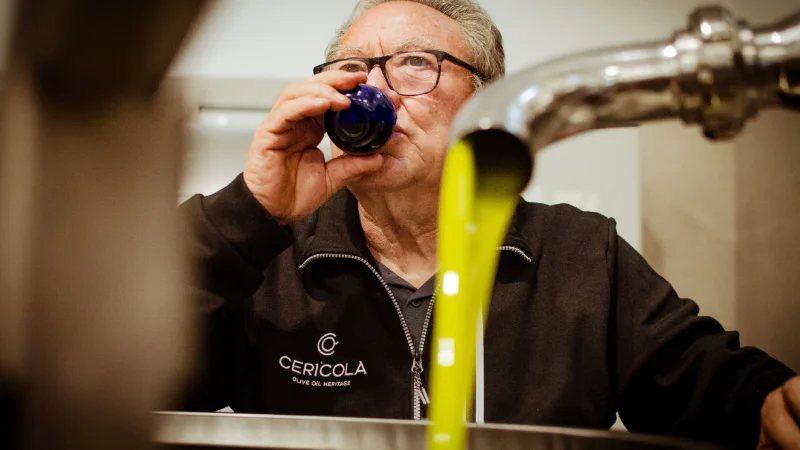
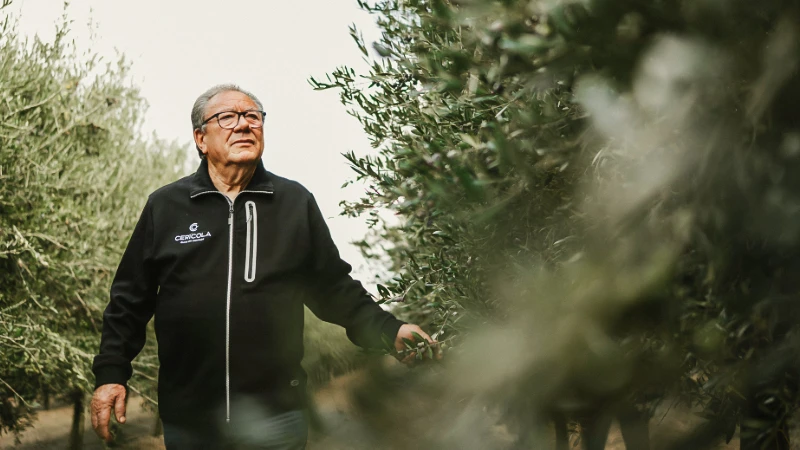
Overseeing every stage described above is the Master Olive Miller, a central figure within the organisation of the olive mill. This professional role, embodied within the company by founder Pietro Leone, serves as a guarantee of quality for consumers. The Master Olive Miller is a highly skilled olive oil expert who combines traditional knowledge with advanced technical expertise.
At Oleificio Cericola, Pietro Leone brings decades of experience and has collaborated directly with Alfa Laval in the development of olive oil processing systems, in addition to being co-inventor of the Moliden-Leone de-stoner.
His role within the production process is fundamental: he oversees and monitors every stage — from olive selection to extraction, and from storage to bottling — applying his expert judgement at every step in order to maintain exceptionally high quality standards.
During processing, the Master Olive Miller continuously monitors parameters such as malaxation temperature, extraction times, machinery cleanliness, and the correct execution of every stage of production. He also analyses and tastes the oil at various stages in order to assess its sensory evolution and make any necessary process adjustments in real time. This combination of artisanal care and scientific expertise is what ensures the consistent production of extra virgin olive oil of outstanding quality over time.
The Master Olive Miller also plays a key role in transparency and communication: he leads tours of the olive mill, explains the technologies employed (such as de-stoned milling) to customers and visitors, and illustrates how every production choice positively influences the quality of the oil.
In this way, more knowledgeable visitors are provided with detailed technical insights, while consumers appreciate the clarity and passion with which the company operates. The constant presence of the Master Olive Miller throughout every stage of production is therefore synonymous with quality assurance: every batch of Cericola olive oil is the result of a process managed with meticulous attention to detail and supervised by a master of the olive oil craft. This philosophy of total quality and transparent supply chain management forms an integral part of Oleificio Cericola’s mission and is reflected in the outstanding reputation its products enjoy on the market.
In conclusion, the journey from olive to oil at Oleificio Cericola embodies tradition, innovation, and professionalism. Every stage — from the careful cleaning of the olives, to de-stoning using patented technology, through to centrifugal extraction and nitrogen-protected packaging — is designed to enhance the exceptional quality of the extra virgin olive oil produced, while ensuring complete transparency of the production process for a knowledgeable and discerning audience. The result is a de-stoned extra virgin olive oil that represents the excellence of Apulia, produced using cutting-edge methods while maintaining full respect for both nature and the consumer, under the expert guidance of a dedicated Master Olive Miller. It stands as a tangible demonstration of how family passion and technical innovation can come together to create a unique, authentic product of outstanding quality.
Services
We grow olive trees, we tell the story of olive oilHere, olive oil is more than just a product: it is people, craftsmanship and seasons. We support growers, open our olive mill to visitors and create memorable gifts for life’s most important occasions.
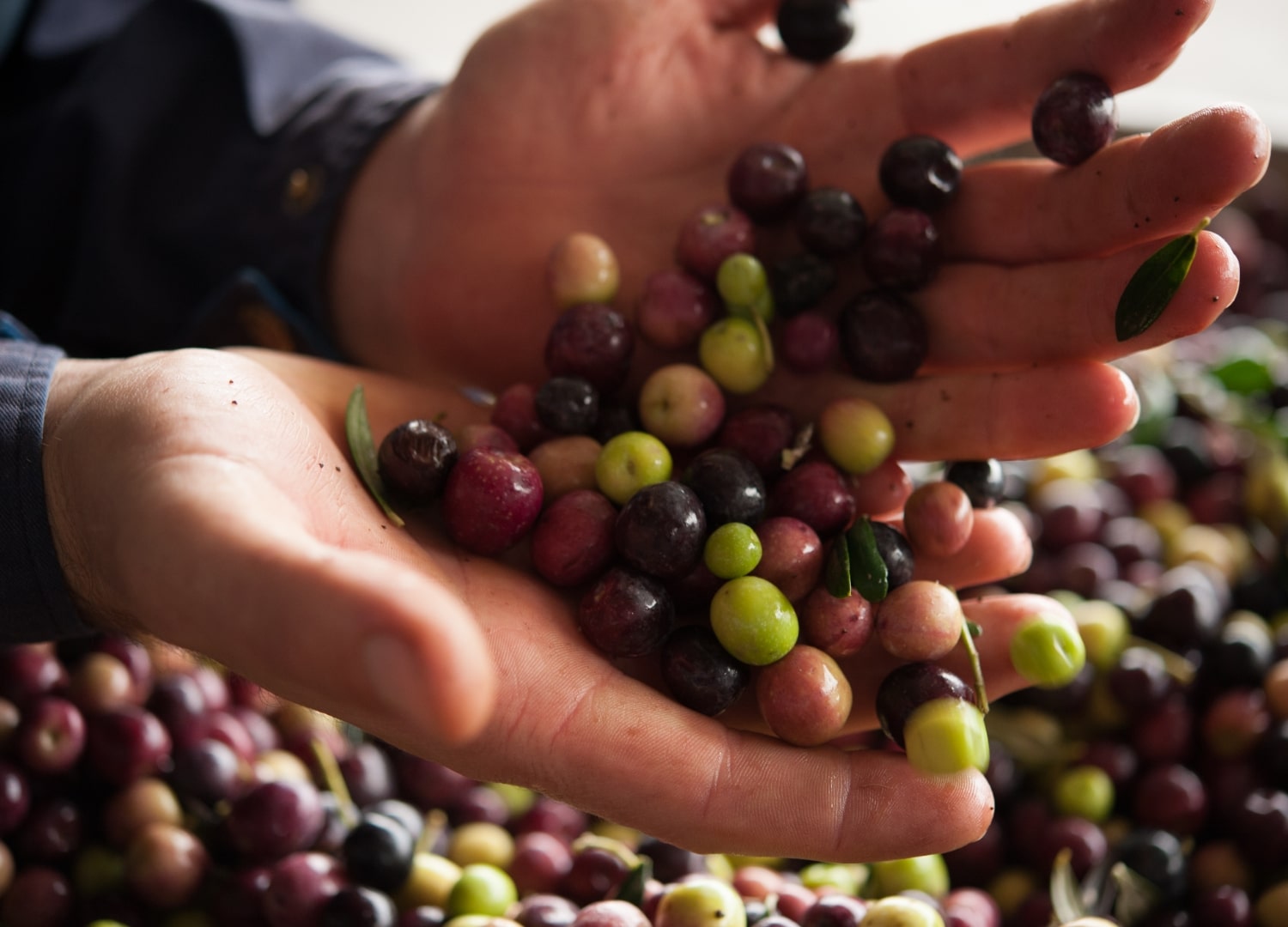
Olive tree planting supports: transform your land into value
Would you like to cultivate olive trees but lack the experience and expertise to do so?
Gourmet favours with monovarietal extra virgin olive oil
A wedding, a christening, or a special occasion: every celebration deserves a thank-you gift that will be remembered over time.
Oleificio Cericola’s offer for the Ho.Re.Ca. sector
More than twenty years of family history embodied in exclusive designer bottles: outstanding products with a contemporary character, created for the everyday needs of chefs, hoteliers, and restaurateurs.
Corporate gifts: Oleificio Cericola’s gourmet gift boxes
More than twenty years of passion for olive oil, transformed into a gift of quality: Oleificio Cericola turns corporate gifting into an experience of flavour and refinement with an authentically Apulian character